
Proposal acceptance and a signed SOW: a practical handoff checklist
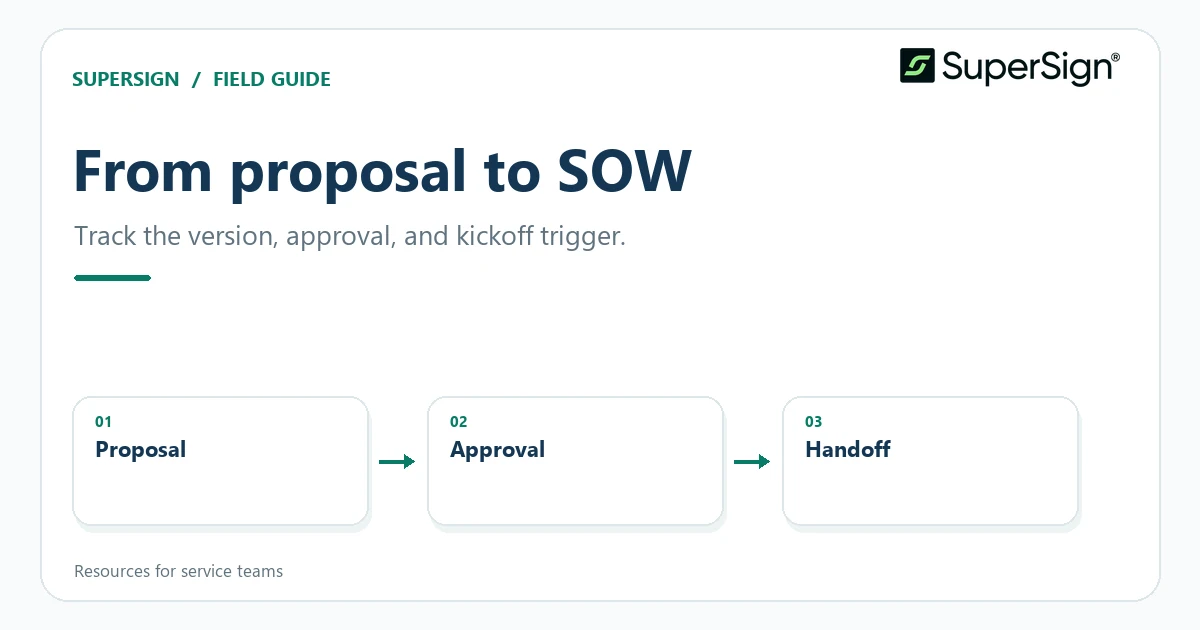
Map the people, scope version and next step before a service project begins.
Start with the last real project
A client’s “yes,” an internal approval, and a signed statement of work (SOW) are separate steps. Before kickoff, record which proposal version the client saw, which SOW version is ready for signature, who is expected to sign, and what event your team uses to start work. Then compare that sequence with your most recent project.
This checklist helps a small service team describe that handoff. It does not determine whether any particular action formed an agreement. The answer depends on the documents, parties and circumstances; bring legal questions to qualified counsel.
Record the version everyone reviewed
Give the proposal and SOW distinct filenames or identifiers. Record which scope, deliverables, schedule, fees and assumptions were visible when someone responded. If the scope changed, keep the prior version and note what changed instead of silently replacing a file.
A simple working table has four columns: document version, sent to, response received and next action. Fill it from one real project; do not assume every client uses the same sequence.
Separate reviewers from signers
List the client contact, budget owner, internal reviewer and intended signer. Ask who can comment on the work, who can authorize a budget and who is expected to sign. Those roles can overlap, but treating them as identical can create avoidable confusion.
For each person, note the stage at which they entered, the version they saw and what you expected them to do. If no one signed in the last case, record how the parties communicated instead of retroactively calling an email a signature.
Make the handoff observable
Before work starts, write the trigger your team actually uses: a named approval, a deposit, a signed document or another event. Keep the relevant message and file together so a colleague can reconstruct why the project moved forward.
At the next project review, ask: which step took time, which person lacked context, and which version was unclear? Test one small process change rather than adding approvals by default.
Related resource: Service Agreements and SOWs: A Document Checklist for Service Firms
Process guidance only, not legal advice or a statement about SuperSign product capabilities.